
You know, the one who casually says, “Oh yeah I got it for like 60% off,” and suddenly everyone in the room looks at you like you either hacked the system… or sold your soul to coupons.
I swear it wasn’t intentional.
It started one random Tuesday night. I was supposed to buy one thing. Just one. A basic pair of sneakers. Nothing fancy. But then I noticed something weird—prices were jumping around like they had caffeine.
And that’s when it hit me.
Learning how to use sales info to shop smarter and cheaper isn’t about being cheap… it’s about timing. And honestly? A little bit of nosiness.
The First Time I Realized Sales Are Kinda… Fake-ish
Okay not fake. That sounds dramatic.
But have you ever seen something listed at $120… then suddenly it’s “ON SALE” for $80… but two weeks later it’s back to $75 without any sale tag?
Yeah. Exactly.
I remember texting my friend:
“Wait… so was it ever actually $120?? Or is this just… vibes??”
She replied:
“Welcome to retail psychology.”
Rude. But accurate.
Why Sales Info Is Basically Your Secret Weapon
Here’s the thing nobody tells you clearly:
Stores aren’t just lowering prices randomly. There’s a pattern. A rhythm. Almost like… waves.
Once you start paying attention to sales info—price history, seasonal discounts, weird mid-week drops—you start seeing it.
It’s like when you learn a new word and suddenly you hear it everywhere.
Same energy.
My Slightly Unhinged (But Effective) Way of Tracking Sales
I didn’t start with spreadsheets or fancy tools. Nope.
I started with screenshots. A LOT of screenshots.
My phone gallery looked like:
- Shoes
- Same shoes (cheaper??)
- Same shoes again (why more expensive???)
It was chaos.
But eventually I leveled up a bit. Here’s what I do now:
1. I Watch Before I Buy (like a creep, but productive)
If I want something—not need, want—I wait.
A few days. Sometimes weeks.
Prices fluctuate more than my mood on a Monday morning.
And guess what? Most of the time… it drops.
Not always. But enough to make waiting worth it.
2. I Use Price History Tools (aka stalking but legal)
Sites like CamelCamelCamel changed everything for me.
You can literally see if a product’s “sale” is actually a sale or just… marketing drama.
And if you’re shopping on Amazon (which, let’s be real, we all are at 1AM), this is gold.
3. I Pay Attention to Timing (this part feels like cheating)
Certain things go on sale at predictable times.
Like:
- Electronics → Black Friday, back-to-school
- Clothes → End of season (hello clearance racks)
- Fitness stuff → January (because resolutions… yeah)
I once bought a jacket in March for half the price it was in December.
Did I need a winter jacket in March?
No.
Did I feel like a financial genius?
Absolutely.
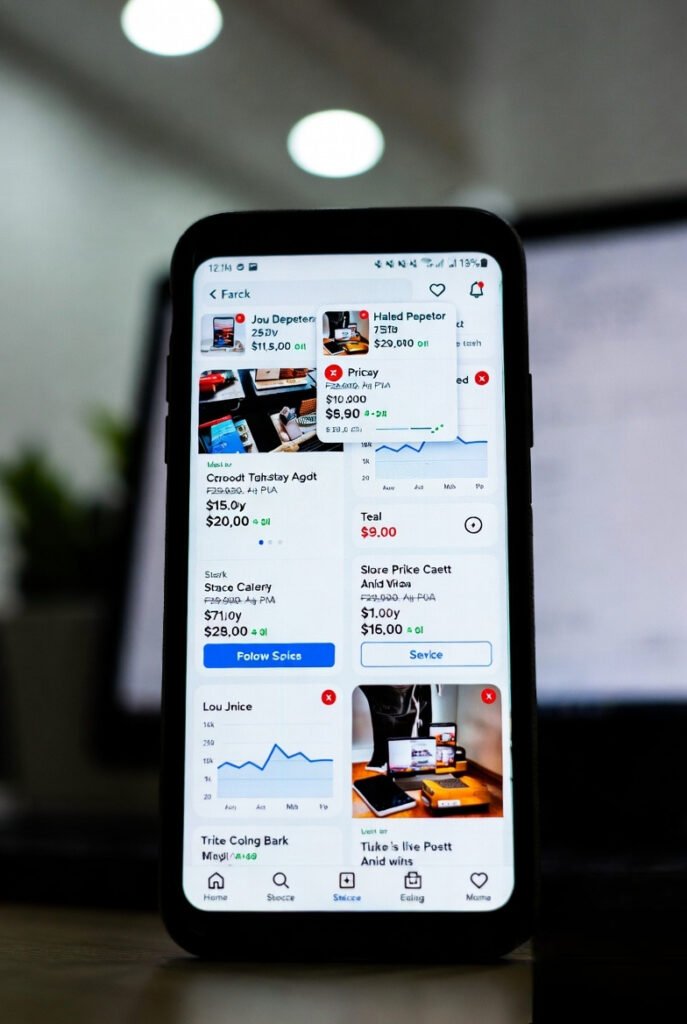
The Emotional Trap of “Limited Time Deals”
Okay this one… this one gets me.
You see a countdown timer:
“ONLY 2 HOURS LEFT!”
And suddenly your brain goes:
“If you don’t buy this now, your entire life will collapse.”
Spoiler: it won’t.
I’ve fallen for this more times than I’d like to admit.
Once I bought a blender. I don’t even make smoothies. Why did I do that??
Because the sale felt urgent.
Not because I needed it.
Now I ask myself:
- Would I buy this without the sale?
- Do I actually need this?
- Am I just bored??
That last one hits hard.
Let’s Talk About Email Subscriptions (ugh, I know)
I used to hate signing up for store emails.
My inbox already looks like a digital landfill.
But… some of the best discounts live there.
So I made a deal with myself:
- I created a separate “shopping email”
- Signed up for brands I actually like
- Check it when I’m already planning to buy something
No random browsing. No midnight impulse chaos.
(Okay… less chaos.)
Sales Info + Patience = Dangerous Combo
Here’s where things get interesting.
Once you understand how to use sales info to shop smarter and cheaper, patience becomes your superpower.
And also your curse.
Because now you know a better deal is coming.
So you wait.
And wait.
And sometimes… you miss it.
Yep. That happens too.
I once waited too long for a pair of headphones.
They sold out.
I stared at my screen like:
“This is my villain origin story.”
The Trick Nobody Told Me: Stack Your Discounts
This part feels illegal. It’s not. I checked.
You can combine:
- Sale price
- Coupon code
- Cashback offer
- Credit card reward
It’s like building a sandwich of savings.
A weird sandwich. But still.
Apps like Rakuten help with this.
And suddenly that $100 item becomes $65.
And you sit there like…
“Did I just outsmart capitalism??”
Probably not. But let me have this.
When Cheap Isn’t Actually Smart
Okay, real talk.
Not every deal is a good deal.
I learned this the hard way after buying:
- A super cheap backpack that broke in 2 weeks
- Headphones that sounded like a potato
Sometimes paying a bit more upfront saves money later.
So now I ask:
“Is this cheap… or just low quality pretending to be a deal?”
Big difference.
My “48-Hour Rule” (which I break sometimes, but still)
If I’m unsure about a purchase, I wait 48 hours.
If I still want it, cool.
If I forget about it?
Well… that says everything.
This one habit alone probably saved me hundreds of dollars.
Also saved me from owning 3 unnecessary lamps.
Don’t ask.
A Random Thought About Why This Actually Matters
It’s not just about money.
Okay, it is. But also not.
It’s about feeling in control.
Because shopping can feel weirdly… manipulative?
Like everything is designed to make you click “buy now” before you think.
So when you flip that—when you start using sales info instead of being used by it—it feels kinda empowering.
Like you’re in on the joke.
The Lazy Person’s Guide to Smarter Shopping (aka me most days)
If all of this feels like too much (fair), here’s the simplified version:
- Wait before buying
- Check price history
- Ignore fake urgency
- Stack discounts when possible
- Don’t buy stuff just because it’s cheap
That’s it.
No spreadsheets required.
No extreme couponing.
No cutting 500 tiny pieces of paper like it’s 2003.
Oh—and One Last Thing I Wish I Knew Earlier
Sales will always come back.
Seriously.
That “once in a lifetime deal”?
It’ll probably be back next month. Or during the next big sale event.
Retail is predictable like that.
So if you miss something?
It’s annoying, yeah.
But not the end of the world.
(Unless it was those headphones I mentioned. Still not over it.)
Optional Fun Links (because why not)
- You ever read those chaotic shopping stories on Reddit? Start here: https://www.reddit.com/r/frugal
- Also, this blog cracked me up: “Why I Bought 17 Mugs During a Sale” (yes, it’s a real thing… somewhere on the internet)
